
How Canada’s hydrogen ecosystem is powering the clean energy transition
From oil sands to hydrogen hubs, Edmonton’s energy ecosystem has continuously evolved. Now, the city is applying decades of industrial expertise to accelerate the clean hydrogen economy—bringing together policymakers, global firms and technical leaders to show large-scale energy transitions can succeed. For organizations focused on decarbonization, meeting in Canada connects your event to the expertise shaping the future of industrial energy systems.
At a glance
An energy ecosystem built to adapt
Edmonton is repurposing decades of energy infrastructure and expertise to build a large-scale hydrogen economy that can grow faster and more efficiently.
From hydrocarbons to hydrogen
Alberta’s advantage is blue hydrogen, produced from abundant natural gas, with associated carbon emissions captured and stored.
An industrial ecosystem ready to scale
Investments by Linde, Air Products and other global firms—alongside a skilled workforce and government support—are positioning Alberta as a leading hydrogen production hub.
A transition shaped by community
International delegations meet in Alberta to align policy and investment—while Indigenous communities are key partners, sharing ownership, training and long-term collaboration.
Why it matters for your next meeting
Meeting in Canada gives your delegates direct access to the leaders advancing clean hydrogen innovation and the expertise shaping the future of industrial energy.
An energy ecosystem built to adapt
The Canadian province of Alberta has been synonymous with energy for more than a century. From natural gas in the early 1900s to the oil development that followed, and clean fuels today, the region has repeatedly repurposed the same industrial skills and infrastructure for new forms of energy.
Hydrogen is beginning to replace natural gas in refining, chemical production and transport in and around the city of Edmonton. Much of this shift builds on existing plants, pipelines and storage infrastructure, reducing the need for entirely new infrastructure.
“As a region, we’re trying to build an end-to-end hydrogen economy,” says Brent Lakeman, executive director of the Edmonton Region Hydrogen Hub. “That means not only producing vast amounts of the gas, but using it across a range of sectors.”
That task is easier in Edmonton than in many other regions. Rather than dismantling decades of industrial investment, the city’s transition is defined by reuse. As Alberta’s provincial capital, Edmonton concentrates decision makers, technical expertise and industrial operators, creating regular points of convening that allow projects to build on existing assets and skills rather than replace them outright.
Hydrogen output in the region is set to expand sharply over the next decade, replacing some of the natural gas currently used by local heavy industry. Edmonton is also becoming a place where approaches to large-scale energy shifts are tested and compared, often in shared technical and policy forums, helping reduce cost and delivery risk in a complex, large-scale industry.
From hydrocarbons to hydrogen
Geography has always shaped energy markets, from the location of hydrocarbon deposits to access to ports. Alberta happens to solve three of the biggest barriers to hydrogen adoption in heavy industry: production costs, related carbon emissions and the difficulty of scaling output.
Green hydrogen, which is made with renewable electricity, generates no emissions but remains expensive and hard to scale. Grey hydrogen, derived from natural gas, is cheaper in gas-rich regions but emits carbon dioxide. Alberta offers a third option: blue hydrogen. Here, abundant natural gas is converted into hydrogen, with waste carbon dioxide channelled into underground storage facilities built over the past decade.
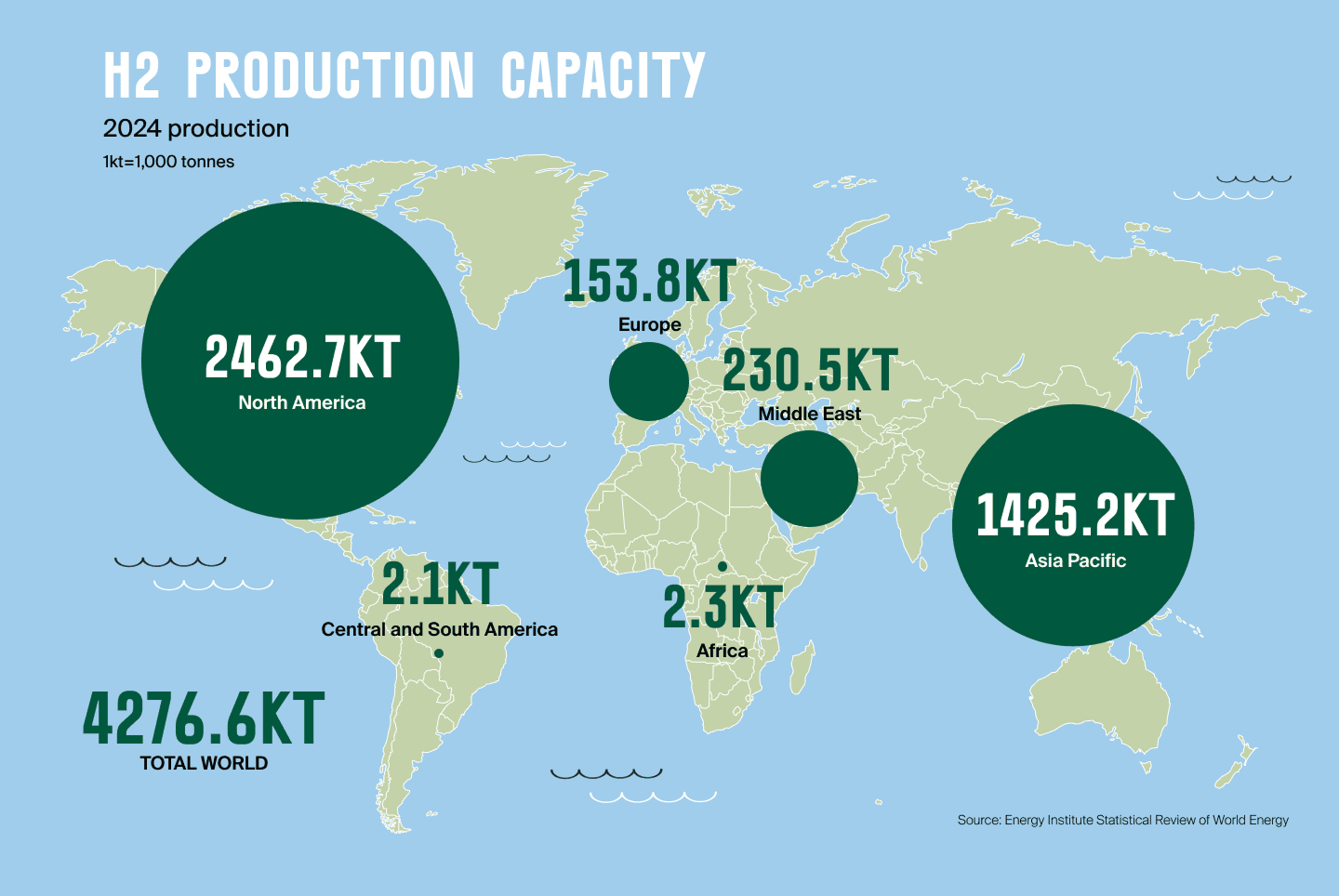
North America already produces more blue hydrogen than any other global region, with Alberta a significant production centre.
“Alberta has one of the lowest-cost natural gas feedstocks in the whole world and access to an existing carbon capture and storage network,” says Nicolas Pattera, president of Linde Canada, a subsidiary of the global industrial gases group. “This existing infrastructure makes Alberta a premier location to drive the clean hydrogen economy forward.”
In 2024 Linde committed US$2 billion to a blue hydrogen facility at a Dow Chemicals petrochemicals plant in Edmonton. The hydrogen will replace natural gas as the plant’s main fuel, with excess supply sold to other industrial users. The project will be the largest blue hydrogen facility in Canada and among the biggest globally.
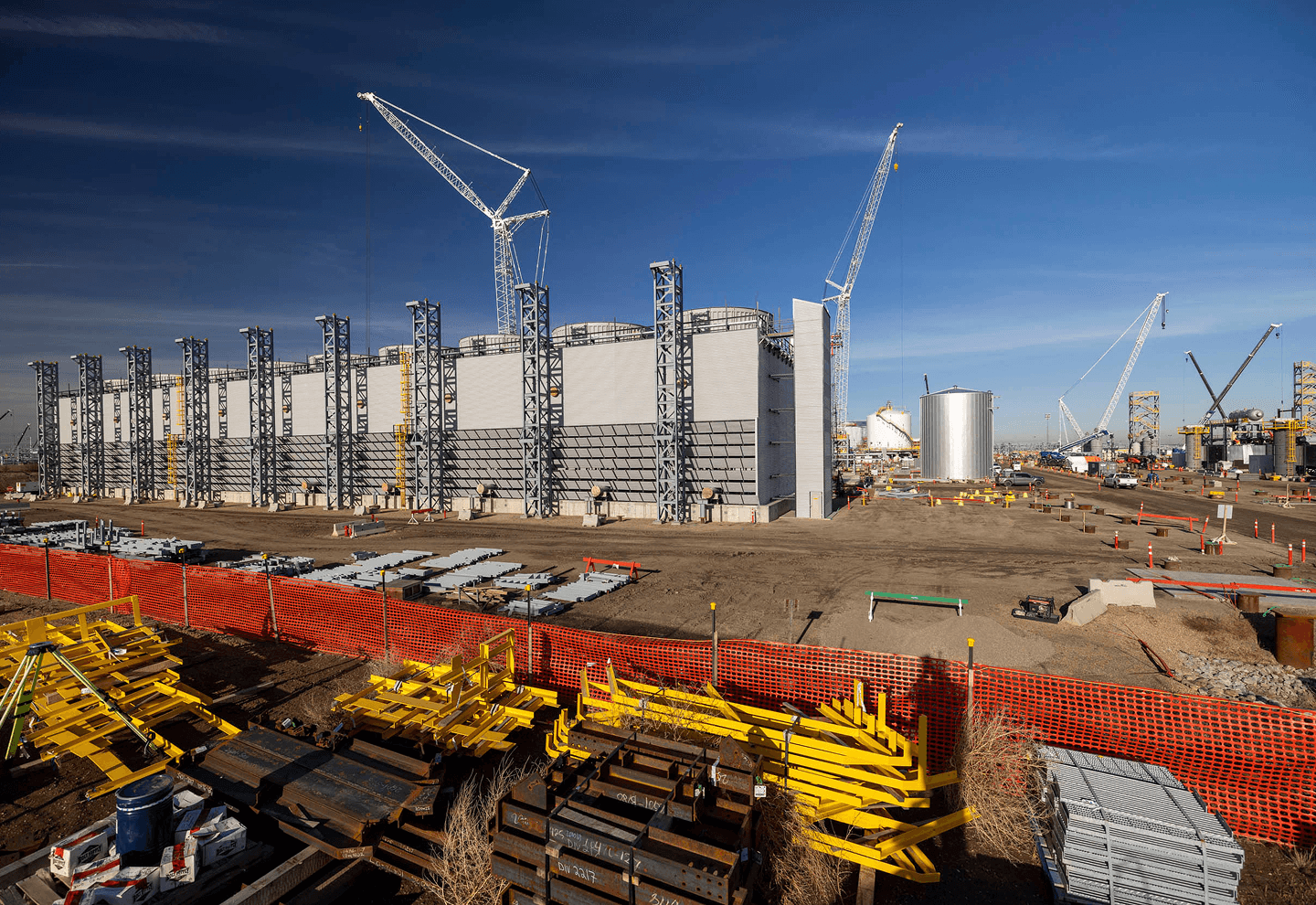
Construction is underway at Air Products’ net-zero hydrogen energy complex in Edmonton.
Photo credit: Curtis Trent
An industrial ecosystem ready to scale
Linde’s investment rests on Alberta’s long-established industrial base. Global firms have been operating in and around Edmonton for decades, providing a base of customers for hydrogen.
“When you talk about hydrogen production, you have to talk about offtake too,” says Lakeman. “You need to have somebody in the area that wants it and that's what we have here with heavy industry.”
Air Products, another industrial gases supplier, is also expanding its footprint in the region. It is well into construction of a large-scale blue hydrogen facility in Edmonton, where carbon emissions will be captured and permanently sequestered. Partly powered by hydrogen itself, the plant is designed to operate as a net-zero emissions complex. It will also house Western Canada’s only liquid hydrogen production facility.
“Air Products has been producing hydrogen in Alberta for decades, and many industries have benefitted from both our existing operations and established hydrogen pipeline system,” says Rachel Smith, Vice-President and General Manager, Canada. “The facility being constructed will only enhance our product offerings with blue hydrogen and liquid hydrogen capabilities.”
The city’s outskirts also offer space for the carbon storage that underpins blue hydrogen economics. Around 2.4 million tonnes of carbon dioxide are already captured each year at three sites close to Edmonton, where it is stored or reused in industrial processes. Proposed projects could lift capacity to 56 million tonnes a year across Alberta by 2030, roughly equal to current global capacity.
Talent is another advantage. “A skilled workforce which is highly experienced in large energy infrastructure projects is critical to project development and success,” says Pattera.
Federal and provincial governments reinforce this ecosystem through tax credits, investment incentives and carbon pricing, providing a measure of certainty around long-term project economics.
A transition shaped by community
Alberta’s expanding hydrogen capability is attracting international interest, in part because it has become a place where production, policy and workforce issues are addressed together. Delegations keen to see how hydrogen production and carbon capture can be developed at scale now visit Alberta with increasing frequency.
The Canadian Hydrogen Convention has become one setting in which policy, skills and investment decisions are brought into closer alignment, helping to shorten the path from ideas to execution.
Those debates have increasingly turned to what the transition means for local communities.
Indigenous communities have emerged as key partners for hydrogen projects that cross land that they manage, sharing in ownership, training and employment. The Enoch Cree and Alexander First Nations, for example, have helped to shape the Edmonton Region Hydrogen Hub and related efforts to put blue hydrogen infrastructure in place, including carbon capture and CO₂ storage. The non-profit Indigenous Clean Energy provides training and career development programs linked to renewable projects.
Conversations that begin at the convention have also shaped how the workforce is being retrained. The Northern Alberta Institute of Technology now offers industry-designed certifications in hydrogen transport and carbon capture, while the University of Alberta runs programs on energy transitions for future policymakers and executives.
Companies participating in the convention also provide apprenticeships and internships for groups currently underrepresented in the energy sector.
“We work with the convention organizers and participants to develop outcomes that will serve not only today's Edmontonians and [the wider] community, but also generations of Edmontonians to come,” says Melissa Radu, Executive Director of Destination Stewardship at Explore Edmonton.
From retraining programs to incentives that encourage the reuse of industrial infrastructure, Edmonton shows how a city built on fossil fuels can adapt its energy ecosystem to support cleaner industries. This model has relevance far beyond Alberta, suggesting that energy-producing regions around the world may be able to pivot to cleaner fuels—without dismantling the industries and jobs that built them.

Opening remarks at the Canadian Hydrogen Convention, an annual event in Edmonton that brings together industry, policymakers and researchers.
Learn more
Energy transition is happening in Canada at scale. Hosting your event here puts delegates inside a working hydrogen ecosystem—where infrastructure, investment and expertise meet.
Learn more
Energy transition is happening in Canada at scale. Hosting your event here puts delegates inside a working hydrogen ecosystem—where infrastructure, investment and expertise meet.